RESOURCES
| PDF - Printable Version of Case Study | Download |
| Products Used | Typhoon Air Cannon |
|---|---|
| Product Types Used | Air Cannon Solutions |
| Industry | Cement |
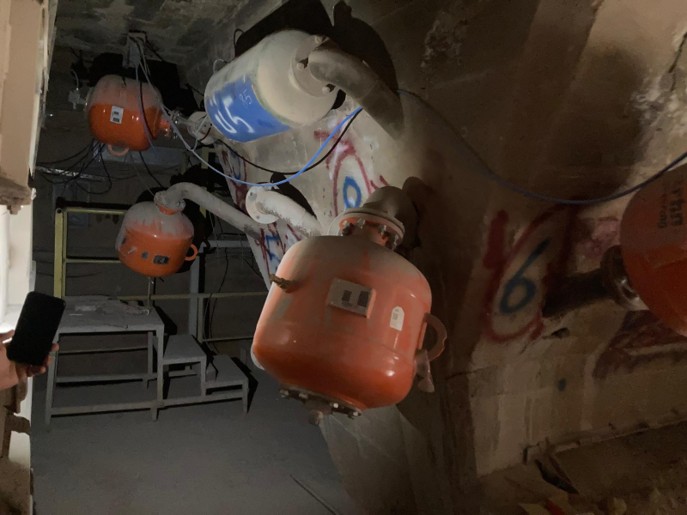
At the clay bunker feeding the raw mill of a cement plant, intermittent material buildup caused recurring process instability. The buildup led to irregular discharge at the bunker outlet, causing fluctuations in raw mill operation. These disturbances increased mill vibrations, placed additional stress on equipment, and negatively impacted raw meal homogeneity. As a consequence, key chemical parameters such as LSF (Lime Saturation Factor), SM (Silica Modulus), and AM (Alumina Modulus) deviated from target values. The instability occasionally propagated downstream, affecting kiln feed consistency, increasing stress on refractory lining, and compromising process efficiency. This resulted in up to 1 hour of production loss per shift and frequent manual cleaning.
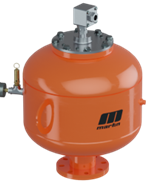
Martin Engineering's expert team carried out a detailed on-site assessment to analyze material flow behavior and bunker geometry. The evaluation revealed that the installed air cannons had insufficient capacity and that nozzle positioning did not adequately support consistent material movement. As part of the optimization program, round fan-jet nozzles were installed at strategically identified locations, and eight Martin® Typhoon air cannons with a 70 liter tank capacity were commissioned. In the concrete bunker, nozzle positions and firing directions were precisely defined through controlled core drilling applications. This engineered configuration ensured effective material activation and stabilized internal flow patterns.
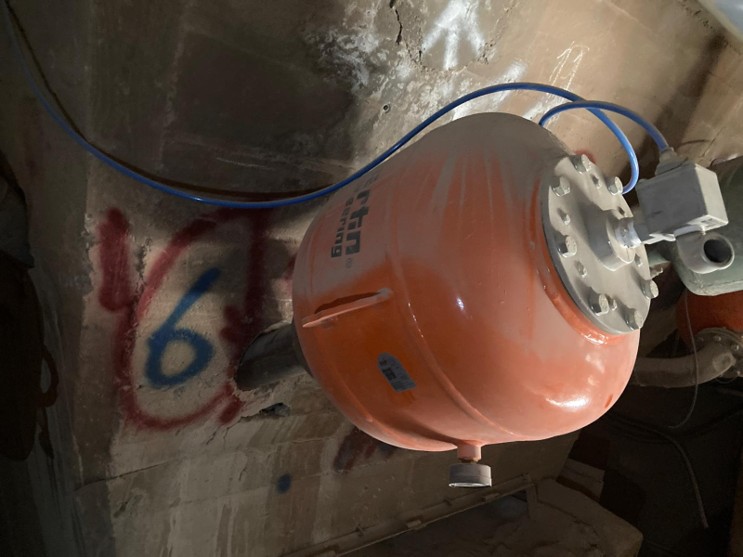
Following implementation, material flow within the clay bunker was stabilized, eliminating irregular discharge. Raw meal homogeneity improved, resulting in stable chemical parameters and reduced STS (Short-term standard deviation). Off spec clinker generation dropped significantly. The need for manual cleaning was almost eliminated, with minimal interventions per shift. Improved kiln feed consistency enhanced kiln stability, increasing MTBF(Mean Time Between Failures) and reducing SPC(Specific Power Consumption) & SHC(Specific Heat Consumption).Overall, clinker handling efficiency was improved with optimized energy utilization and lowered maintenance costs.
| PDF - Printable Version of Case Study | Download |
+27 (0) 13 656-5135
Martin Engineering
Antwerpen Street & Arnhemsingel
Die Heuwel, Witbank, Emalahleni
Mpumalanga, South Africa 1042
feedback@martin-eng.com
+27 (0) 13 656-5135